
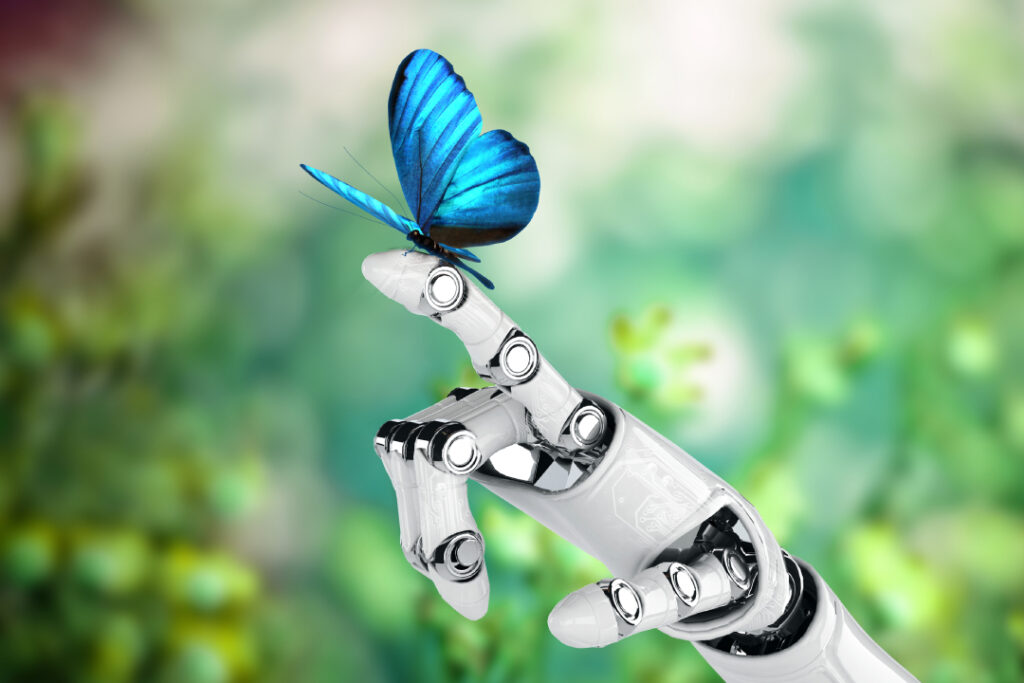
As artificial intelligence rapidly advances, outpacing even expert predictions, the stark contrasts between human cognition and AI capabilities provoke as much intrigue as unease. By examining the fundamental differences between natural and artificial intelligence, we gain perspective on the unique strengths and limits that determine what tasks machines master versus roles for which human insight remains indispensable.
While machines display unparalleled pattern recognition exceeding human aptitude for processing inputs and calculations, AI still falls severely short when contextual reasoning and problem-solving involving complex real-world variables. Machines also lack human instincts for asking the right questions in unscripted situations.
Where statistical intelligence drives AI to derive probable outcomes from abundant historical data, humans draw from a lifetime of experiential learning that machines lack. We form intuitive hunches to make deductive leaps absent the need for pure data. Our curiosity probes the significance behind outliers while AI dismisses anomalies as statistical noise.
Humans evolved as inherently social creatures shaped by interpersonal connections underpinning everything from primeval survival to modern corporate structures. Yet for AI, modeling human dynamics and the nuances behind rapport, trust, leadership, persuasion, collaboration and diplomacy remains profoundly precarious.
Machines also demonstrate zero capacity for emotional or cultural intelligence so fundamental to social cohesion. AI cannot sense and respond to subtle social cues like voice tone, body language, facial expressions or hints of sarcasm which humans detect and decipher automatically via our mirror neuron system absent in silicon circuitry.
While AI produces astonishing creative content synthesizing associations between existing works, machines lack the ingenuity to create entirely novel ideas disruptive enough to shift paradigms. Algorithms similarly cannot rival human aptitude for improvisation responding adaptively to unpredictability in physical environments.
Unlike AI confined by categorical parameters, human ingenuity transfers concepts between disparate domains to derive groundbreaking connections defying programmed logic. We form complex metaphors drawing links between seemingly unrelated contexts. Such associative elasticity fuels visionary leaps leading to works of transcendent genius.
Devoid of ethical awareness or emotional affinity guiding conscience, AI systems fundamentally lack mortal accountability for actions or decisions. Machines similarly have no basis for inherent integrity ethics or codes of conduct outside what gets hardcoded deliberately by human developers.
This moral susceptibility leaves AI vulnerable to misuse for deception, manipulation, incitement, surveillance overreach and algorithmic bias if proper safeguards fail. Until models reliably align recommendations with ethical standards, human supervision remains imperative to oversee AI deployment to ensure outcomes upholding universal ideals of justice, equality and human rights.
The meteoric trajectory of artificial intelligence indeed seems poised to eventually meet or exceed human intelligence across all spheres from analytical ability to creative potential. Yet even as the line blurs between the capacities of biological and silicon cognition, humans maintain dominance over social, moral and experiential realms underpinning judgment, trust, accountability and cultural constants cardinal across civilizations.
So while future horizons loom where emerging pluralities of intelligence operate in complement, the uniquely human characteristics of compassion, creativity and conscience warrant our continued contributions safeguarding collective welfare as progress accelerates into fascinating yet unknown frontiers.
About the writer: Subrao Shenoy is CEO of planetRE that hosts a variety of Generative AI Solutions for Real Estate (Aelo.AI and chocolatechips.ai). He has run a successful proptech company for over a decade with experience of automating millions of transactions across the nation. He also owns seminal patents in CRM, Property Search, and Blockchain /AI .